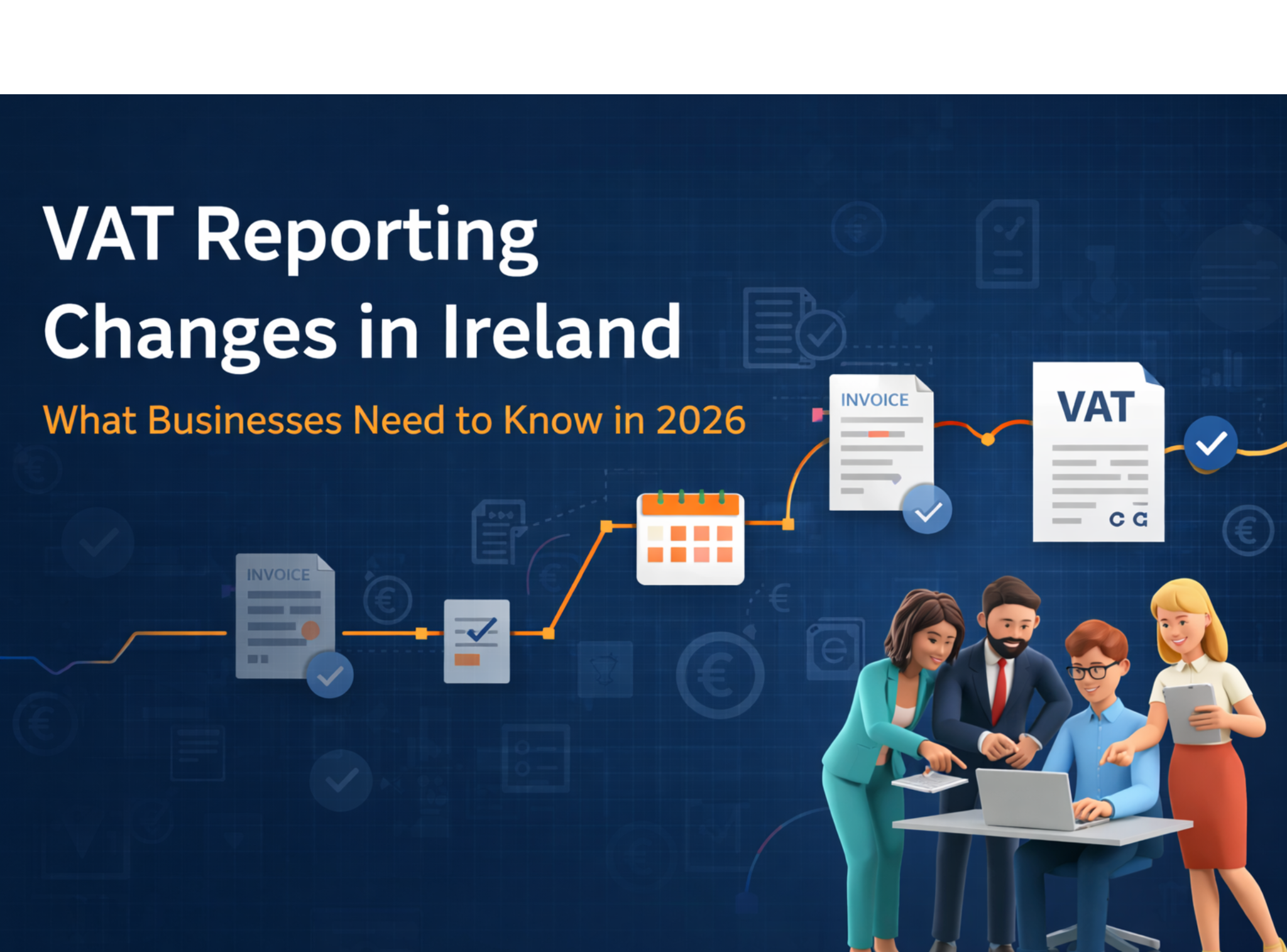
What Businesses Need to Know in 2026
VAT reporting requirements in Ireland changed in 2025, and many businesses are still adapting. Traditionally, organisations submitted VAT returns annually, reviewing everything in a single end-of-year process. However, this has now shifted. Businesses are required to complete VAT reporting on a bi-monthly basis.
This change reflects Revenue’s continued focus on digitisation, accuracy, and timely compliance. In fact, according to Revenue, the move is designed to improve visibility and ensure more consistent compliance across Irish businesses. Additionally, it aligns with wider EU initiatives such as VAT in the Digital Age (ViDA), which aims to modernise VAT systems and introduce more real-time reporting across member states.
Why This Matters for Finance Teams
For finance and accounts payable (AP) teams, this shift significantly increases both the frequency and pressure of compliance tasks. As a result, teams must adapt quickly to new expectations.
Key implications include:
- Faster turnaround required
Invoice processing, approvals, and reconciliations must now happen within tighter timelines. - No room for backlog
Missing invoices or delayed statement matching can directly impact VAT submissions, rather than just internal reporting. - Greater audit readiness
More frequent reporting brings increased visibility and scrutiny. Therefore, accurate and traceable records are essential.
The Shift to Continuous Reporting
Importantly, this isn’t just a change in frequency, it represents a shift in mindset. Instead of relying on annual “catch-up” processes, businesses must now adopt continuous reporting and real-time visibility.
However, for organisations relying on manual processes, this transition can expose several challenges, including:
- Approval bottlenecks
- Missing or duplicated invoices
- Limited visibility across workflows
- Increased risk of errors
The Role of AP Automation
To adapt successfully, businesses need more than speed, they need the right systems. Manual processes that once supported annual reporting often struggle under more frequent reporting cycles.
This is where AP automation solutions like SmartOffice become essential.
With capabilities such as:
- Automated three-way matching (PO, invoice, GRN)
- Statement reconciliation
- Price discrepancy alerts
- Full audit trails and document search
Finance teams benefit from:
- Greater visibility across processes
- Stronger control and consistency
- Reduced risk of errors
- Faster, more reliable reporting
As a result, organisations can stay aligned with Revenue’s expectations while improving overall efficiency.
What This Means for Irish Businesses
Overall, these changes signal a broader shift towards:
- Real-time financial accuracy
- Digitised compliance
- Greater transparency across operations
Consequently, businesses that adapt early will:
- Reduce administrative pressure
- Improve reporting accuracy
- Stay ahead of compliance requirements
- Gain clearer insight into spend
Ultimately, the move to more frequent VAT reporting is more than a regulatory update, it represents a shift towards smarter, more connected financial operations.